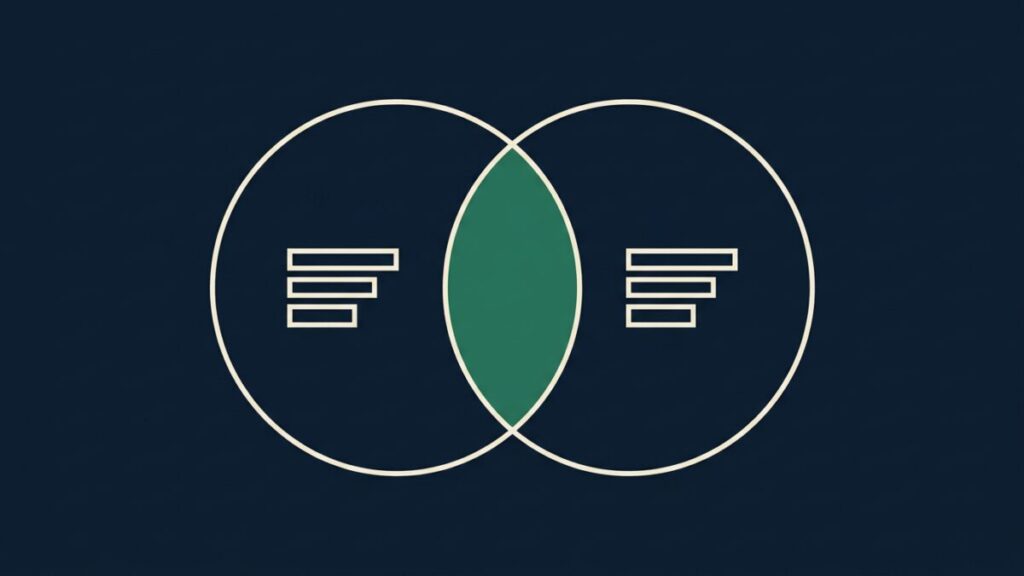
Korean SEO means optimising for two search engines with almost nothing in common. Naver holds about 63% of Korean search and ranks content published inside its own blog, cafe and Q&A platforms. Google holds about 30% and works the way you already know. The practical consequence is that Korean SEO is two separate projects, and the Naver half is closer to content marketing and community building than to technical optimisation.
Here is what actually differs, and what to do about each.
The split you are optimising for
2025 average market shares in Korea, per InternetTrend.co.kr:
| Engine | Share |
|---|---|
| Naver | 62.86% |
| 29.55% | |
| Bing | 3.12% |
| Daum | 2.94% |
Naver’s share actually increased year on year, up from 58.14%. The assumption that Google is steadily taking over Korean search is not currently supported by the data.
Google’s near-30% still matters, and it skews younger and more internationally-oriented. For many foreign brands that is the more immediately reachable audience, which is why Google Korea is often the faster first win even though Naver is the bigger prize.
How Korean search engine ranking actually works
Korean search engine ranking is decided across two systems that share almost no logic, and a page can rank well on one while being invisible on the other.
On Naver, ranking is largely a question of which Naver property your content sits on and how much topical authority that account has built. A Naver Blog post from an account with strong C-Rank in your subject will outrank a better-written page on an external website, because Naver gives its own platforms guaranteed placement and discontinued the standalone external-website section in 2020.
On Google Korea, ranking works the way it does anywhere: crawlable pages, relevant content, internal structure and backlinks. Korean-language content and links from Korean domains carry extra weight for Korean-language queries, but the mechanics are familiar.
The practical result is that improving your Korean search engine ranking usually means two parallel projects rather than one. Publishing inside Naver raises the first. Conventional technical and content work on your own site raises the second. Doing only the second is why many foreign brands conclude that Korean SEO does not work.
Difference one: Naver ranks platforms, not pages
Google indexes the open web and ranks pages within it. Naver is a portal that fills its results with content from Naver Blog, Naver Cafe, Knowledge iN, Naver Shopping and Naver Place.
A Naver results page can carry more than 19 distinct sections, and the standalone section that listed ordinary external websites was discontinued in 2020. External sites still appear, but they compete for less space on a busier page.
This inverts the usual priority. On Google you optimise your site. On Naver you publish onto Naver, then use your site to convert the traffic that arrives.
Difference two: C-Rank rewards topical narrowness
Naver’s C-Rank algorithm scores the authority of a source rather than a page, and it weights topical consistency heavily. A blog that publishes only about coffee equipment will outrank a larger, broader blog on coffee equipment queries.
Google has moved in a similar direction with topical authority, but nowhere near as strictly. On Naver, a blog that covers five unrelated categories dilutes its authority in all five. Naver’s own guidance recommends manually setting post categories rather than letting the system infer them.
Practical implication: if you are building Naver Blog presence, pick a narrow topic and stay in it. Resist the urge to cover everything your company does.
Difference three: D.I.A+ and experience-based content
Naver’s D.I.A+ system assesses how closely content matches the intent behind a query, and it also processes feature images to build the visual snippets shown in results. Image choice, filenames and captions carry more weight than most Western SEOs expect.
Underneath it, Naver strongly favours first-hand, experience-based writing. Content that reads as though someone actually used the product and is reporting back consistently outperforms polished corporate copy. Translated marketing material fails this test almost automatically, which is why writing in Korean from scratch is a prerequisite rather than a refinement.
Difference four: AI Briefing changed the target
As of April 2026, Naver’s AI Briefing appears on roughly 20% of all searches and has over 30 million monthly active users. It generates summary answers by synthesising Naver Blog, Cafe and Knowledge iN content.
Two things follow. Clicks are being absorbed at the top of the page, exactly as they are on Google. And the way to appear inside those answers is to be present in the community content they are built from. Being cited in Korean AI search is downstream of community presence, not of technical site work.
Difference five: getting indexed
Naver will not reliably find your site on its own. You register with Naver Search Advisor, the equivalent of Google Search Console, verify ownership, and submit your XML sitemap and robots.txt. Naver’s crawler is called Yeti and needs to be explicitly allowed. Content typically appears about a week after crawling.
Open Graph tags matter more in Korea than elsewhere, because so much traffic moves through KakaoTalk and other messaging apps where the OG preview determines whether anyone clicks.
What stays the same
Not everything is different, and the Google half of Korean SEO is genuinely familiar.
Site speed, mobile experience, clean information architecture and internal linking all matter on both. Backlinks matter on Google Korea in the usual way, and they matter on Naver too, though less decisively. Structured data helps on both, and Naver’s own 2026 advertiser guidance now explicitly recommends implementing schema.org markup.
Building links from Korean domains lifts both engines at once, which makes it one of the few genuinely shared investments.
A realistic sequence
For a foreign brand starting from nothing, the order that wastes least effort:
- Register with Naver Search Advisor and make sure Google can crawl the site properly. Cheap, fast, prerequisite.
- Localise the site into real Korean. Everything downstream depends on this, and doing it later means redoing the work.
- Target Google Korea first. Familiar mechanics, faster results, and it validates which keywords actually convert before you spend on the harder channel.
- Build a focused Naver Blog presence. One topic, consistent publishing, experience-led writing. C-Rank authority accumulates slowly and cannot be rushed.
- Add Cafe and Knowledge iN. Once you have something worth discussing, extend into the communities that feed both organic results and AI Briefing.
- Build Korean backlinks throughout. Slow, compounding, helps both engines.
Expect four to six weeks before you see movement and three to four months before results are meaningful. Anyone promising Naver page one in a month is describing something other than organic SEO.
Frequently asked questions
Is Naver SEO the same as Google SEO?
No. Google ranks pages across the open web. Naver mostly ranks content hosted inside its own blog, cafe and Q&A platforms, and its C-Rank system scores source authority by topic. The technical fundamentals overlap, but the strategy does not.
Do I need a Korean website to rank in Korea?
You need Korean-language content. A Korean domain is not required, and a well-structured Korean section or subdomain on an existing site works. What does not work is an English site with translated pages bolted on.
How long does Korean SEO take?
Typically four to six weeks for early movement and three to four months for meaningful results. Naver’s C-Rank authority builds over time through consistent topical publishing, so it rewards patience more than intensity.
Should I focus on Naver or Google for Korea?
Both, but usually Google first. Naver reaches more people at about 63% share, while Google at 30% is faster to rank on and reaches a younger, more internationally-minded audience. Starting with Google validates your keywords cheaply before you commit to the slower Naver work.
How do I improve my Korean search engine ranking?
Treat it as two projects. For Naver, publish consistently in one topic area on Naver Blog and build presence in Cafe and Knowledge iN, because Naver ranks its own platforms ahead of external sites. For Google Korea, apply conventional SEO to Korean-language pages and earn links from Korean domains. Expect four to six weeks for early movement and three to four months for meaningful results.
Do backlinks matter for Naver SEO?
Less than they do for Google, but they still help, and they lift your Google Korea rankings at the same time. Links from Korean domains are the more valuable kind.
The hard part of Korean SEO is not understanding the differences. It is executing the Naver half, which requires publishing consistently in Korean, inside Korean platforms, over months.
Our Korean SEO and backlink building service covers the authority side, and Naver SEO and viral marketing covers the content and community side. If you want a read on where your site stands across both engines, tell us your domain.
Search share: InternetTrend.co.kr 2025 averages. AI Briefing figures: Naver, April 2026.